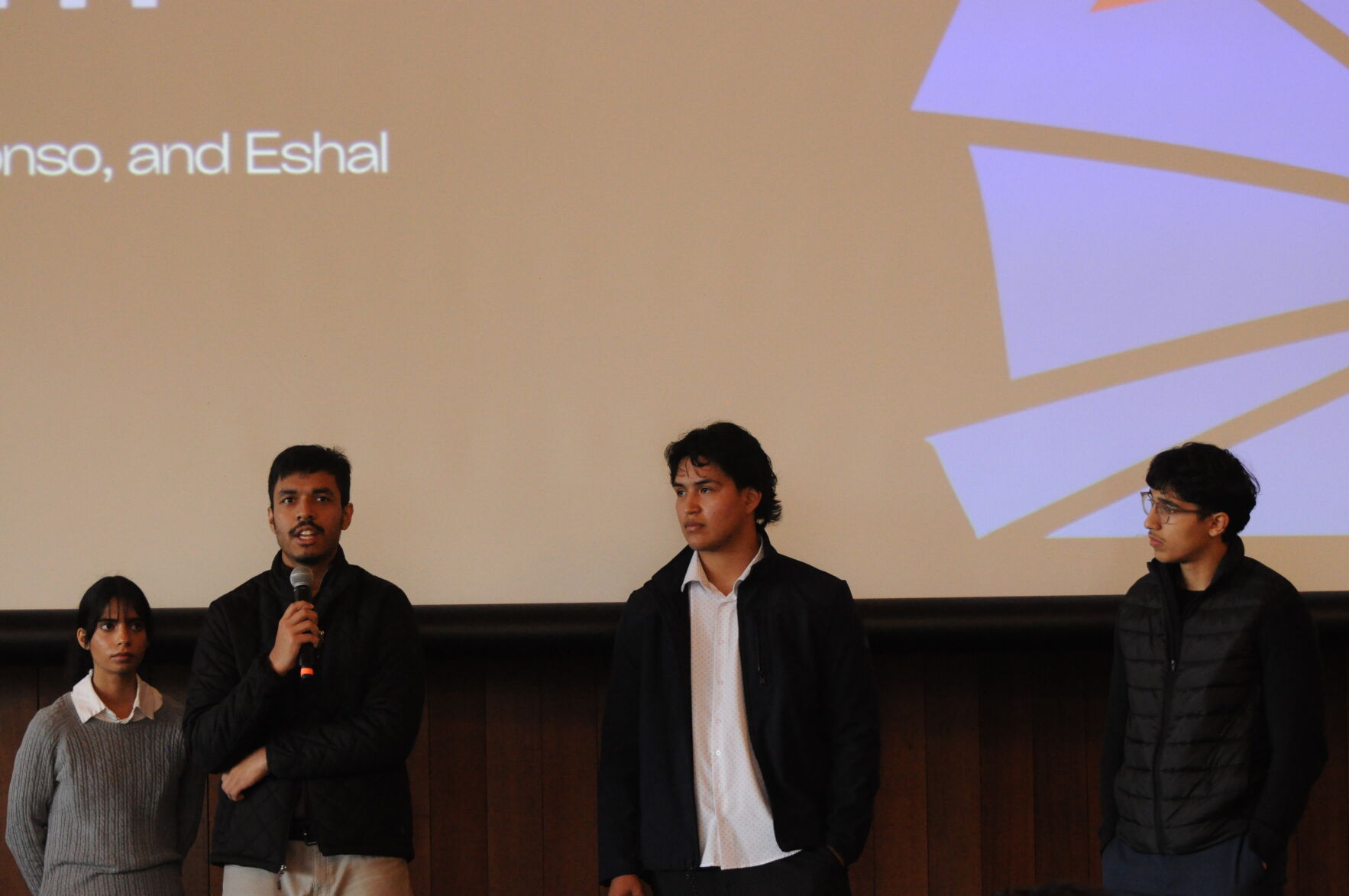
Foothill College student Shrinath Desai and his team want to bring artificial intelligence (AI) access to the millions – maybe billions – of individuals around the world who lack internet and smartphones.
After winning the 2025 Case Competition at Foothill College, their nascent business known as NAVA Call is one step closer to doing so.
“It was an amazing journey,” Desai said. “We are looking forward to expanding this in some way in the future. We’re looking at what else can be done to improve our services for the market.”
The Foothill Case Competition, now in its seventh year, gives students an opportunity to present business ideas to a team of Google employees empaneled as judges. The students are tasked with posing digital-focused business ideas that tackle modern social problems.
For the current year’s iteration, the theme is “Digital Divide 2.0”; the focus is on AI and online access for typically underserved communities. The concepts focus on technology-driven solutions to technology access and literacy.
Laurence Lew, business and social entrepreneurship professor who organizes the event, said the competition allows students to go beyond a typical education.
“Students, they typically take classes, but classes aren’t enough. They get to work with real professionals on real problems and what they get is real experience that they can apply,” he said.
Lew said the school has collaborated with Google for the past four years – previous themes include elder care and aid for chronic conditions. This year’s theme was chosen to expand beyond health and into the technology sphere – a prime professional focus for many students (the event is open to all community colleges and includes students from Foothill and the College of San Mateo in this year’s iteration).
“This divide has been here before and it’s back again,” Lew said. “Now it’s not just about access, it’s about using new technologies to better your life.”
The final round teams had a focus on techno-humanitarianism.
NAVA Call allows users to use AI through a toll-free phone call in their own language, without the need for online access or smartphones. The AI phone assistant helps users complete tasks online that may require online or smartphone access to accomplish.
The finalists have similarly philanthropic problem solving ideas.
Sweet Dreams is an AI literacy program geared toward Amazonian children in Peru; AgriTools is an agriculture training app for East African farmers; AMI is a digital mentor for low literacy users; Equalearn gives personalized learning support through AI; and Project Reboot gives incarcerated individuals modern tech education to gain jobs upon release.
“The students show a lot of drive and engagement,” said Laura Vardoulakis, a senior staff user experience research manager at Google Research who served as one of three judges.
“They are definitely eager to learn real-world business skills and collaborate with professionals. I know firsthand how helpful mentors and professional guidance can be early in one’s career, and this case competition is one way I can pay it forward.”
The competition is one of the many experiential learning opportunities offered by the college – one of the reasons, administrators noted, that it is highly-ranked in annual college listings. Foothill College tops national rankings for community colleges – in 2024 it ranked as the #1 community college in California for 2024 by Niche, a school ranking website.
“Thank you to our students for saying yes to this challenge,” said Kristina Whalen, Foothill College president.