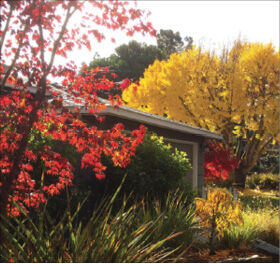
As a native of Ohio, one of my favorite seasons was always autumn, because of the crisp cool weather and the beauty of the fall foliage. Years ago, when I first moved to the Bay Area, I was delighted to see that here, too, there is a beautiful show of fall color.
We just experienced the end of another spectacular season, full of vivid splashes of red, orange, gold and purple. The annual display by the Pistache in downtown Los Altos, for example, was a treat to enjoy.
Maybe this season’s display has inspired you to consider adding some plants for fall color in your own garden. Now is a great time to prepare – your new plants will be able to take advantage of the rainy season to start becoming established, before the harsh dry summer arrives.
There are many species of trees that produce great fall colors, including varieties of Acer (Maples), Fraxinus (Ash), Pyrus (Ornamental Pears), Liquidamber (Sweet Gum), Nyssa sylvatica (Sour Gum), Parrotia persica (Persian Parrotia) and Ginkgo biloba.
Some people find deciduous trees to be lacking in interest in winter, and prefer to have trees that are green year-round rather than those that lose their leaves. However, even without their leaves, the following deciduous trees have features that provide continuing interest into the winter season.
• Diospyros kaki (Persimmon): The orange fruit persists.
• Pistacia chinensis (Chinese Pistache): Tiny red fruits persist on the female trees.
• Malus (Crabapple): Some varieties have red or yellow fruit that persist.
• Lagerstroemia indica (Crape myrtle): Exfoliating bark.
• Japanese Maples: Beautiful form.
• Cercis (Redbud): May have seed pods that persist.
Many species of trees, such as Maples, are available in multiple varieties that display different colors. The color that a particular species displays may not be what you have in mind. Be certain to research the particular variety of the species that you’re considering to ensure that it will display the color you want.
For an especially vivid tableau, consider grouping several trees that will turn contrasting colors at a similar time of the season. An example of such a pairing would be the bold yellow Gingko biloba with the crimson of Acer palmatum ‘Bloodgood.’
Fruit trees and shrubs that typically boast vivid fall colors include blueberries, peaches, nectarines, apricots, pomegranates and some varieties of edible pears.
If you don’t have space for a large tree, you can find many of these available in dwarf or semi-dwarf forms.
Deciduous shrubs and vines
Deciduous shrubs present another option if you don’t have the space to add a large tree. Varieties of Cotinus coggygria (Smoke Tree), Hydrangea quercifolia (Oak-leaf Hydrangea), deciduous Berberis (Barberry) and Nandina domestica (Heavenly Bamboo) are examples of shrubs that can be striking in the fall. Some of these, too, have features that provide interest in the winter, such as:
• Hydrangea quercifolia: Exfoliating bark.
• Nadina domestica: Red berries; certain varieties, such as ‘Firepower,’ have leaves that change color, but they don’t lose their leaves.
Vines are another option: Vitis ‘Roger’s Red’ (Wild Grape) and Parthenocissus varieties can display striking red foliage. Varieties of Wisteria, known for its beautiful flowers in the spring, also produce a show of golden fall color. There’s even a groundcover that will turn brilliant shades of red before losing its leaves: Ceratostigma plumbaginoides (Dwarf Plumbago).
Prepare now for a vivid fall season next year.
Mary Dateo of Dateo Design is a landscape designer, member of the Association of Professional Landscape Designers and certified in the Qualified Water Efficient Landscaper and Green Gardener programs. For more information, email [email protected].