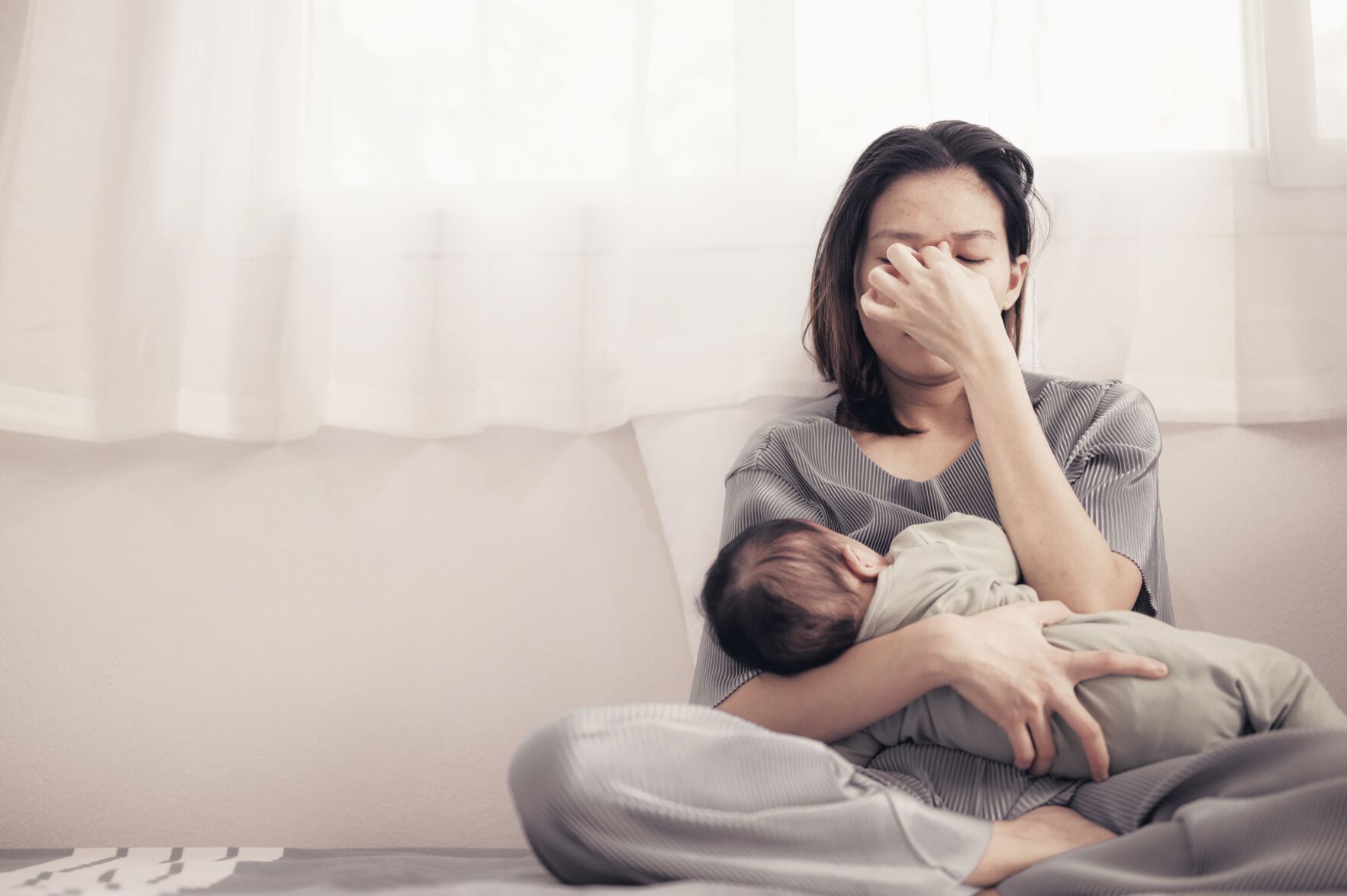
Bringing a new life into the world is an exciting experience for most new parents. But for those who develop postpartum depression, intense feelings of sadness and anxiety can overshadow joy.
Postpartum depression affects approximately one in seven women who give birth, according to the National Institutes of Health. Although those with the condition experience classic depression symptoms including fatigue, low energy, feelings of sadness, loss of pleasure in previously enjoyed activities, disturbed sleep and suicidal thoughts, some of the symptoms directly pertain to the child and parenthood.
“On top of those are symptoms of helplessness, ruminating thoughts about being a very bad mother or not a good enough mother, not being able to do enough for the baby, and even a significant disconnect with the baby,” said Dr. Nirmaljit Dhami, director of the Inpatient Perinatal Psychiatry Unit at El Camino Health’s Scrivner Center for Mental Health and Addiction Services. “ (Some have) thoughts of wanting to leave or run away, or wanting to escape from the current life situation. So these are usually the symptoms that are seen in severe postpartum depression.”
Some symptoms don’t present or aren’t as intense for those with mild or moderate forms of the condition, Dhami said. Postpartum depression also differs from depression in that it’s more anxiety-heavy, so many of the symptoms may be more related to anxiety than depression.
Some with the condition also experience intrusive thoughts of harm coming to them or their child. Intrusive thoughts, which are often triggered by anxiety or stress, seemingly come out of nowhere and leave those experiencing them feeling uncomfortable.
“These are just thoughts where the mother does not have any intention to act on (them),” Dhami said. “They’re usually very terrifying for the mother, and she will often do things to prevent herself from having these kinds of thoughts, but they are seen as a significant number of cases of postpartum depression.”
Although the exact cause of postpartum depression is hard to pinpoint, some people are more at risk of the disorder than others.
Struggling with mental health before and during pregnancy, having a history of depression or a familial history of significant depression, medical comorbidities or complications or difficulties during pregnancy can all increase the risk of developing postpartum depression.
Social determinants, such as socioeconomic difficulties, food insecurity, homelessness, limited health-care access, lack of support and intimate partner violence, may also put mothers at a higher risk of developing postpartum depression.
Treatment
Since 2019, women with postpartum depression have been able to get an intravenous dose of Zulresso (brexanolone), the first U.S. Food and Drug Administration-approved treatment.
Earlier this month, the FDA approved the first oral route treatment for the condition, Zurzuvae (zuranolone).
Zurzuvae is taken once daily for 14 days, providing quick improvement of depression symptoms, according to Biogen, the biotech company that developed the treatment.
Previously, Dhami said, treatment included regimens prescribed for depression and anxiety management, like select serotonin reuptake inhibitors. While symptoms would clear up for some, patients still had to take the medication unless advised to taper off use by a doctor or psychiatrist. But Dhami described the new medication as a sort of steroid for the brain that does not require continued use.
“The initial data that the FDA looked at was that patients would stop the medication after two weeks and then they would not have relapse of symptoms for up to a few weeks to a few months,” she said. “But it remains to be seen if it’s going to be truly effective long term. We don’t have that data yet.”
At El Camino Health, which has one of the few mother-baby specialized psychiatry units in the country, postpartum depression treatment includes inpatient hospitalization in a highly supportive and structured environment, mom-baby attachment work with highly trained staff, group and individual psychotherapy, medication management and self-care. Unlike some treatments, Dhami said El Camino Health also focuses on the baby and overall family unit rather than just the mother.
El Camino Health doesn’t offer the intravenous treatment, Dhami said, but if a patient fits the criteria for taking Zurzurvae, it’s worth a shot. But that’s not up to the hospital, she added. While the pill will be available to pharmacies after the FDA schedules it as a controlled substance around the fourth quarter of 2023, access depends on whether a pharmacy offers it and whether insurance companies will offer a copay.
“A lot of times newer medications are much more expensive, and the insurances are more hesitant to cover those meds and have their own policies about what needs to be done prior to covering the medication,” Dhami said. “I’m hoping that that doesn’t happen for zuranolone, because it is indicated for postpartum depression. However, it remains to be seen how that plays out.”
Dhami emphasized how postpartum depression is very screenable and treatable, and she encouraged those who are pregnant or have a family member who’s pregnant to educate themselves and be proactive about postpartum depression.