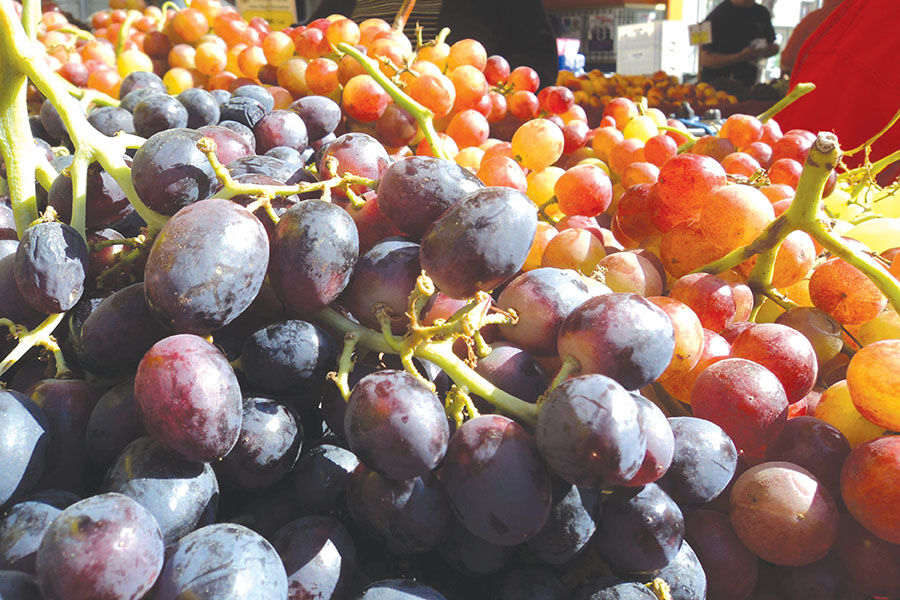
You’ve just found a new variety of table grape at your farmers’ market, not the usual Thompson seedless, but a lovely, deep-red “globe” variety. Or you’ve found the deep blue/black heirloom Concord grape. You’ve just discovered one of the many reasons to shop your local farmers’ market – variety.
Certified farmers’ markets celebrate the value they bring to a local community during National Farmers’ Market Week (Sunday through Aug. 13). The entire month of August can feel like a celebration of local produce reaching its summer peak – the unique varieties of grapes and other fruits and vegetables you buy stimulate local economies, help preserve farmland and increase access to healthy and nutritional food.
Farmers’ markets also play an essential role in their cities by creating space for community connection and actively fostering more resilient and equitable local food systems.
What does it mean to be a certified farmers’ market, and why is it so important that you shop “certified”? In short, it means the produce is delivered to the market directly from the farm and from the growers themselves. In California, only California-grown produce may be certified for sale in our state’s farmers’ markets.
So, when you find that unique bunch of plump, sweet grapes at your certified farmers’ market, you know it’s grown in California. There are many varieties of table grapes grown in the state, including Red Flame, Autumn Royal, Concord seeded, Pearl, Princess and Red Globe.
Table grapes versus wine grapes
Have you ever wondered why you can’t take these table grapes home and crush them into wine? Table grapes are a bit different from wine grapes. Table grapes are from different species, and these differences can make for good wine, but not good eating.
The main distinction between grapes for serving and those for the production of wine can be found in the distinct characteristics of taste, acidity and sugar content.
The first difference between these two grapes has to do with their skin thickness. Table grapes have thin skin, perfect for munching away but not ideal for making wine. When it comes to making great wine, especially red wine, a thicker skin is better, and that means more tannin. Tannins are what adds to wine’s texture and mouthfeel.
Second, the sweetness of the grape is a very important characteristic. Wine grapes are much sweeter than table grapes. The grapes need a lot of sugar if yeast is going to convert juices into alcohol. Higher sweetness comes from the species itself, along with the fact that wine grapes are harvested much later in the season, allowing their sugars to concentrate as much as possible. Wine grapes are harvested at around 22-30% sugar, while table grapes are closer to 10-15% sugar. This also means wine grapes deteriorate much faster when picked than grapes meant for the table.
Finally, the yield of wine grapes compared to table grapes is different. While a winemaker gets approximately 10 pounds of fruit per vine, table grape producers use a trellis system that allows the grape bunches to hang without touching each other, providing the ability to produce 30 pounds of fruit.
Stop by your local certified farmers’ market this time of year and you’ll find mounds of sweet, locally grown table grapes glistening in the sun. At the Los Altos market, visit Allard Farms from Westley for lovely grapes.
Debra Morris works for the Pacific Coast Farmers’ Market Association, which operates the Downtown Los Altos Farmers’ Market. The seasonal market is scheduled 4-8 p.m. Thursdays on State Street, with a new, expanded footprint extending into part of a parking plaza.