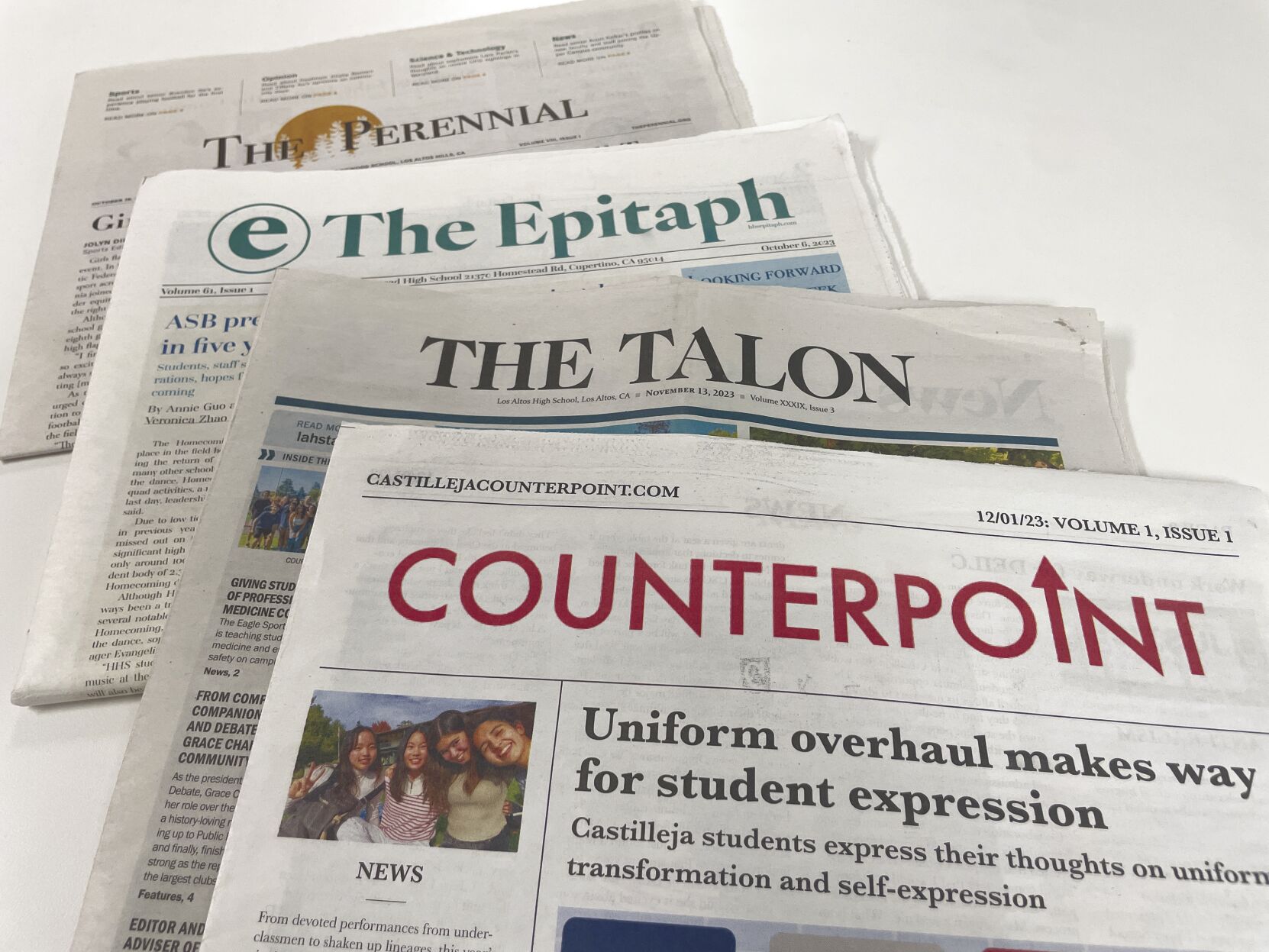
When I began writing for my school newspaper, my parents noticed that I became more engaged in conversations, bringing current events to dinner and thinking more critically about the world around me. Being a student journalist prompted me to read more news and discern the credibility of what I was reading.
Taking advantage of my school’s extracurricular journalism program made the difference in my high school experience, and I think this opportunity should be even more accessible and widely offered.
Schools should offer, if not require, a journalism or media education class for credit as part of their core curriculum. Strong journalistic reporting and writing skills are easily transferable to a wide range of other subjects and fields, and mastery of these areas should be a critical part of high school education.
The value of a journalism course might be best explained by removing the word “journalism” from the conversation entirely. What is often misunderstood as a niche field providing students with the skills for a specific profession actually encompasses a diverse collection of values and competencies applicable to almost any profession or endeavor.
For example, many of my peers are interested in advocacy work, and platforms like Instagram and TikTok are making it increasingly easier to share a niche message to a wider audience. But I’ve found the culture on social media relies heavily on sensational, eye-catching statements and simplified concepts, a model which harms both the content’s consumer and creator.
Requiring students to take a course on media literacy and writing for an audience would provide an ethical and procedural framework for this work, ultimately increasing the impact of their efforts. Learning to use social media as a legitimate tool for social change could have a profound impact on our society as we progress further in the digital age, and incorporating media literacy into curriculum is a step toward that.
While most journalism classes don’t fit into the traditional classroom model, project-based learning classes can offer a new way of learning that inspires students to think critically and creatively while strengthening their problem-solving skills.
And according to the Boston University Center for Teaching and Learning, “Because of its focus on creativity and collaboration, (project-based learning) is enhanced when students experience opportunities to work across disciplines.” Student journalism as a project-based learning model is a fitting example of this, requiring students to demonstrate strong research skills, writing agility, data analysis and presentation skills.
But it’s not enough to simply offer a class. Mountain View High School’s journalism program previously began with an introduction to journalism course, but that class was recently dissolved after the school paper published a controversial article. As a student journalist, such action by the administration reveals to me a lack of support for the principles of journalism and for student advocacy work overall.
In the age of social media and disinformation, support from educators can make responsible journalism and ethical practices the standard for Generations Z, Alpha and beyond. And the push for a media-literate generation can and should be a community effort.
Students should take advantage of opportunities to engage with and learn about student media, and educators should participate in and develop these programs as they can. Most crucially, administrators should actively demonstrate their support through providing resources and promoting the development of courses to expand upon or supplement existing extracurricular journalism programs.
Ruby Dowling is a Town Crier editorial intern and a senior at Castilleja School, where she is editor-in-chief of the school newspaper, Counterpoint.