Residents within the boundaries of Fremont Union High School District are urging administration to abandon plans to replace its aging turf fields with new artificial turf on all five school campuses.
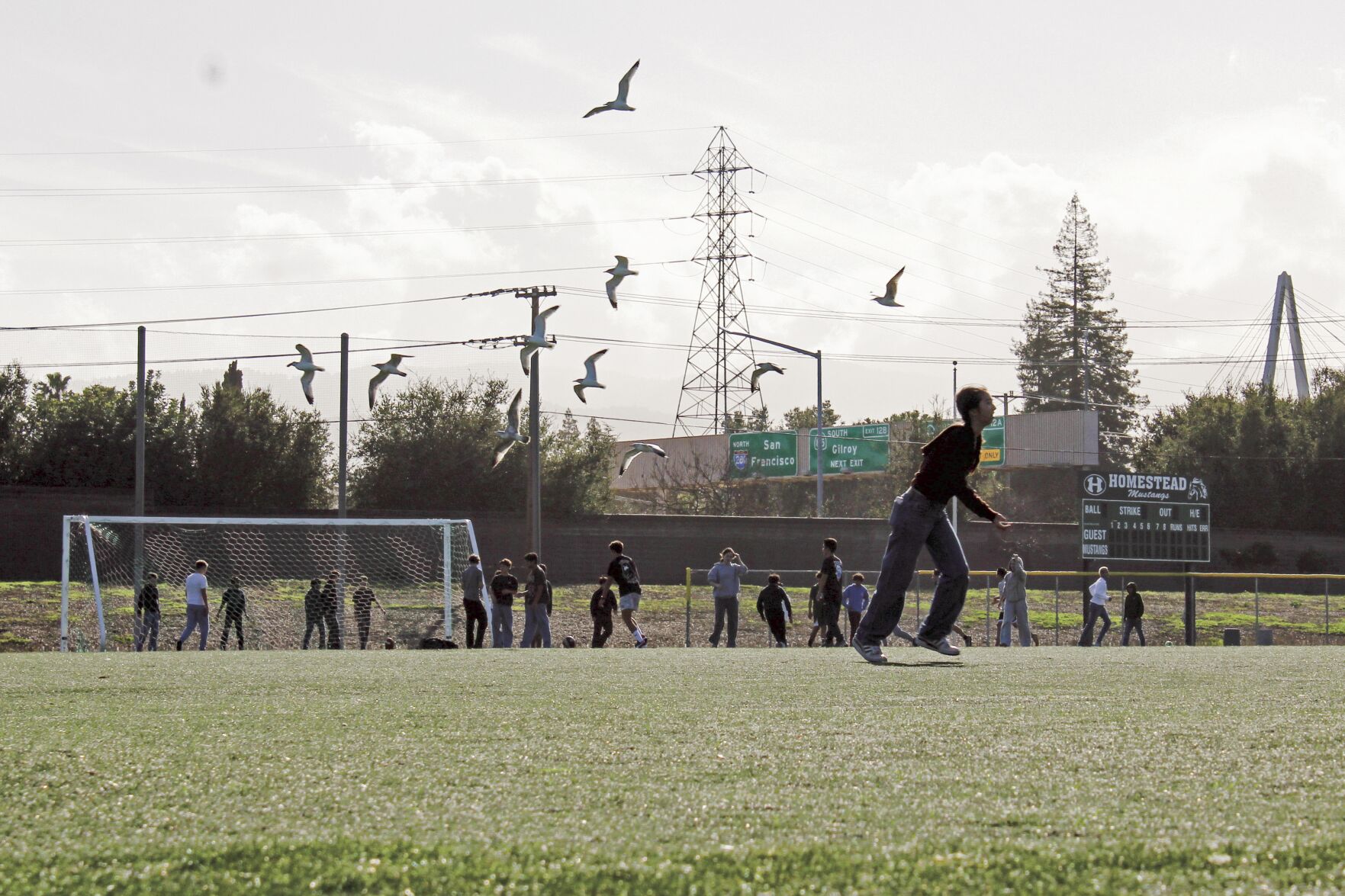
FUHSD originally replaced 12 of its 15 grass fields with artificial turf using Measure B bond money between 2009 and 2013 primarily to curb water use. The three remaining grass fields were converted with a later bond measure, and now, 1.7 million square feet of the turf is set to be replaced under a new proposed plan, funded by the 2022 Measure G bond. The turf had an estimated lifespan of eight to 10 years, pushing many of the district’s fields three to four years past their expiration.
Discussions surrounding a plan to renovate the 12 oldest fields began last year, but the board of trustees has not yet set a date to hear and approve a final renovation plan, so residents against fake grass are mobilizing to garner support in an effort to sway administrators from their current plan.
Though the state recently recognized FUHSD as a Green Ribbon Award Silver honoree for its achievements in sustainability, specifically pointing to the district’s transition to water-saving artificial turf, the larger scientific community is questioning the environmental impacts and safety of fake grass. The Santa Clara County Medical Association penned a letter to FUHSD and surrounding districts urging the use of natural fields for the health of students and the environment. The Santa Clara County Office of Sustainability and Valley Water each discourage the installation of turf, at least on a residential level.
“While artificial turf can save water and fertilizer, it is generally not a good sustainable alternative because it does not support the ecosystem,” the county website reads. “It does not work in harmony with nature. It is a dead material. It does not support soil health, it is not recyclable, it does not break down, it does not provide habitat and it can even get hot enough to cause burns.”
Andrea Wald, whose two kids graduated from Homestead High, is one of the leading crusaders against the reinstallation of what she calls “plastic carpets.” She and other concerned residents formed the Community for Natural Play Surfaces (CFNPS) which advocates against artificial turf. She and other members of the group contend that the touted environmental benefits of artificial turf are nothing more than “greenwashing” and that the use of synthetic turf introduces more environmental and health risks than natural grass.
“Whether you love or hate how it looks or plays, artificial turf is bad news for human and environmental health,” Wald told the Town Crier. “We need to redirect the millions of public dollars that go into paying for these plastic carpets towards instead paying for skilled professionals that can, cost-effectively and water-wisely, keep fields of real grass in safe condition for our communities.”
There is also rising suspicion that artificial turf companies’ claims that their product can be recycled are not honest. A FairWarning investigation in 2019 found that millions of square feet of synthetic turf went to the same place to die as old tires – landfills.
In response to CFNPS criticism, FUHSD superintendent Graham Clark told the Epitaph, Homestead High’s student newspaper, that environmental concerns were only one factor considered when choosing between new artificial turf and going back to grass. According to a presentation at a board study session on the topic back in September, costs and maintenance hours associated with maintaining a natural field were strong deterrents to embracing natural fields. The district estimated that the annual cost of maintaining grass and artificial turf fields were $52,066 and $15,906 respectively. Additionally, the district estimates that the lack of maintenance required by synthetic turf makes the fields available for activities 5,040 hours per year versus an estimated 2,550 for natural grass.
Still, CFNPS see real grass as worth fighting for. The group is encouraging residents to attend an informational presentation comparing natural grass and artificial turf by an advocate from the Sierra Club environmental stewardship program, 3 p.m. Sunday in room 201, Cupertino Library, 10800 Torre Ave.