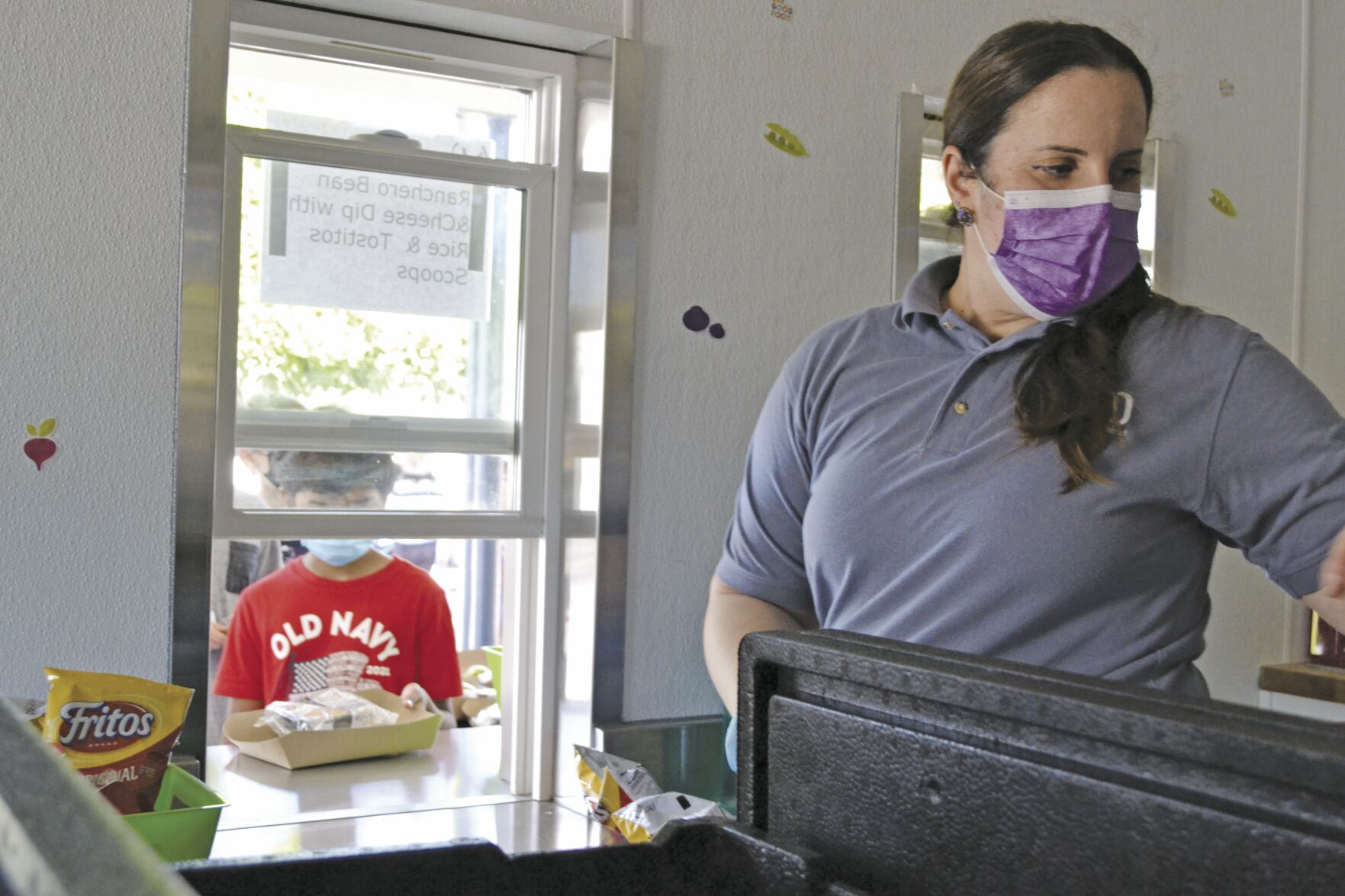
After a whirlwind summer of planning, Los Altos School District administrators finally feel like they have hit their stride with their new Universal Meals Program, serving 21,400 meals to LASD students in August and nearly 44,000 meals in September.
LASD recently implemented the lunch program in accordance with a state law passed in July 2021, which requires public school districts and charter schools serving students in transitional kindergarten through grade 12 to provide two meals free of charge (breakfast and lunch) during each school day to students requesting a meal, regardless of their free- or reduced-price meal eligibility.
Complying with the legislation required huge upheaval in LASD’s previous nutrition services program. The district doesn’t have a central kitchen, and most facilities on school campuses did not previously have the capacity to handle the increased meal services mandated by the state.
Thanks to one-time funding from the state and $1 million from the district’s general fund, LASD managed to build facilities, hire dedicated lunch staff and strike a contract with a Bay Area meal supplier. Administrators admitted that while the summer and early weeks of implementation were stressful, they are happy with how the program is shaping up.
Universal Meals requirements
The law requires that each school serve two free meals to children a day regardless of financial need. Students can opt for breakfast (available starting approximately 20 minutes before class begins) and/or lunch. Each meal must comply with state guidelines, which means they must meet federal standards of health and must include portions of certain food groups.
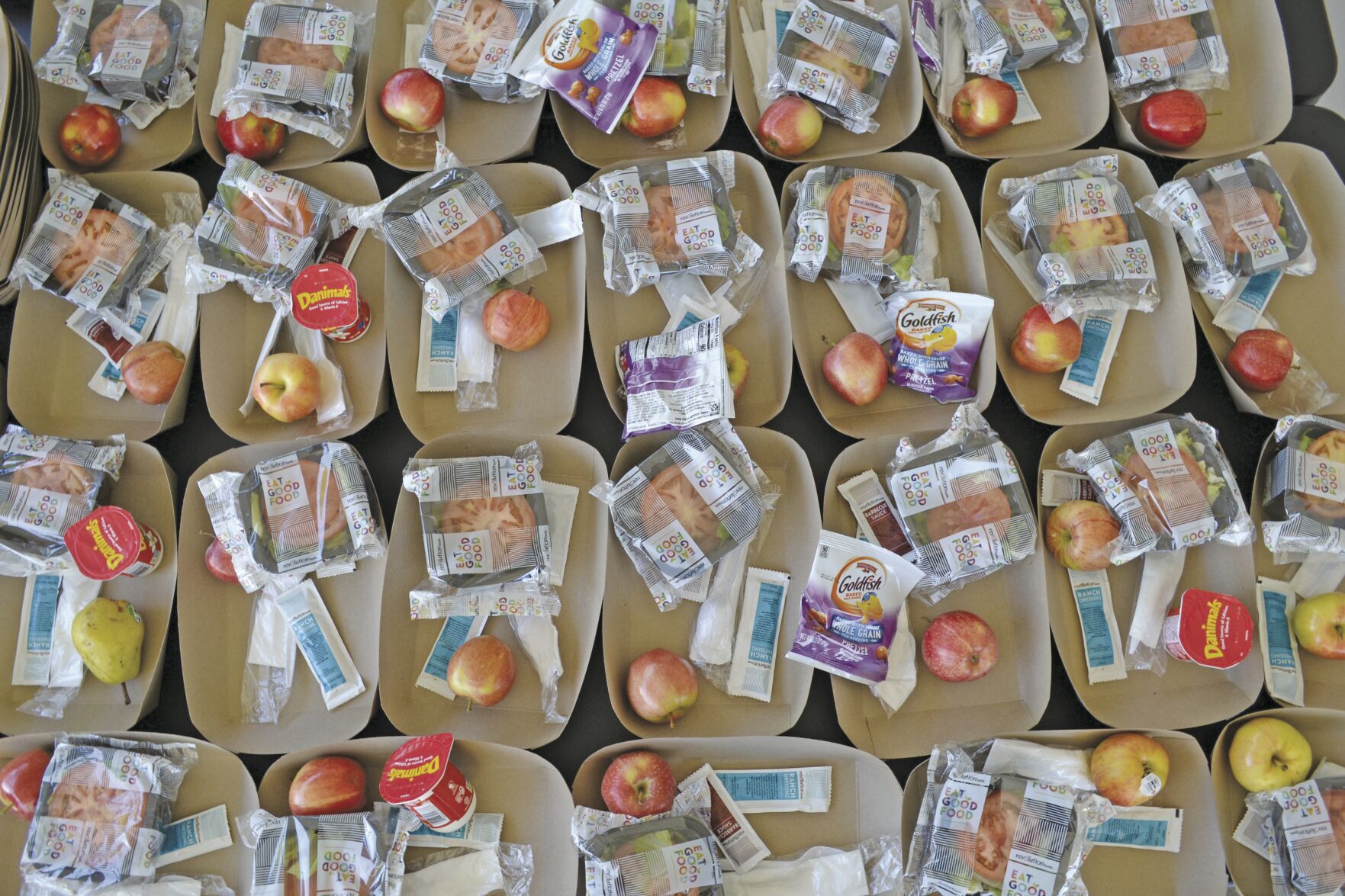
Breakfast must include three of four components: a grain, milk and a fruit or vegetable, with at least one component being a fruit or vegetable. For lunch, the meal must include a meat or meat substitute, a grain and at least two of three items: vegetable, fruit or milk. The vegetables typically come prepackaged, while the fruit comes in the form of a small apple, pear or orange.
Covington principal Wade Spenader said serving breakfast has made a larger impact than initially expected. Accounting for roughly one-third of meals served at Covington daily, breakfast has proven to be
particularly popular among multi-sibling families whose time is limited on weekday mornings.
“Now parents can drop off their kids early to be fed instead of worrying about breakfast,” Spenader said.
Prior to this year, school meals cost a student approximately $7 per meal. Now, the students pay nothing themselves and merely use a scan card to pick up their meal. Each student’s card must be scanned in order for the cost of the meal to be reimbursed by the state. To get the line moving quicker, Covington administrators opted for students to drop their scannable cards into a bucket to be scanned later and then returned to their classroom prior to lunch period the next day.
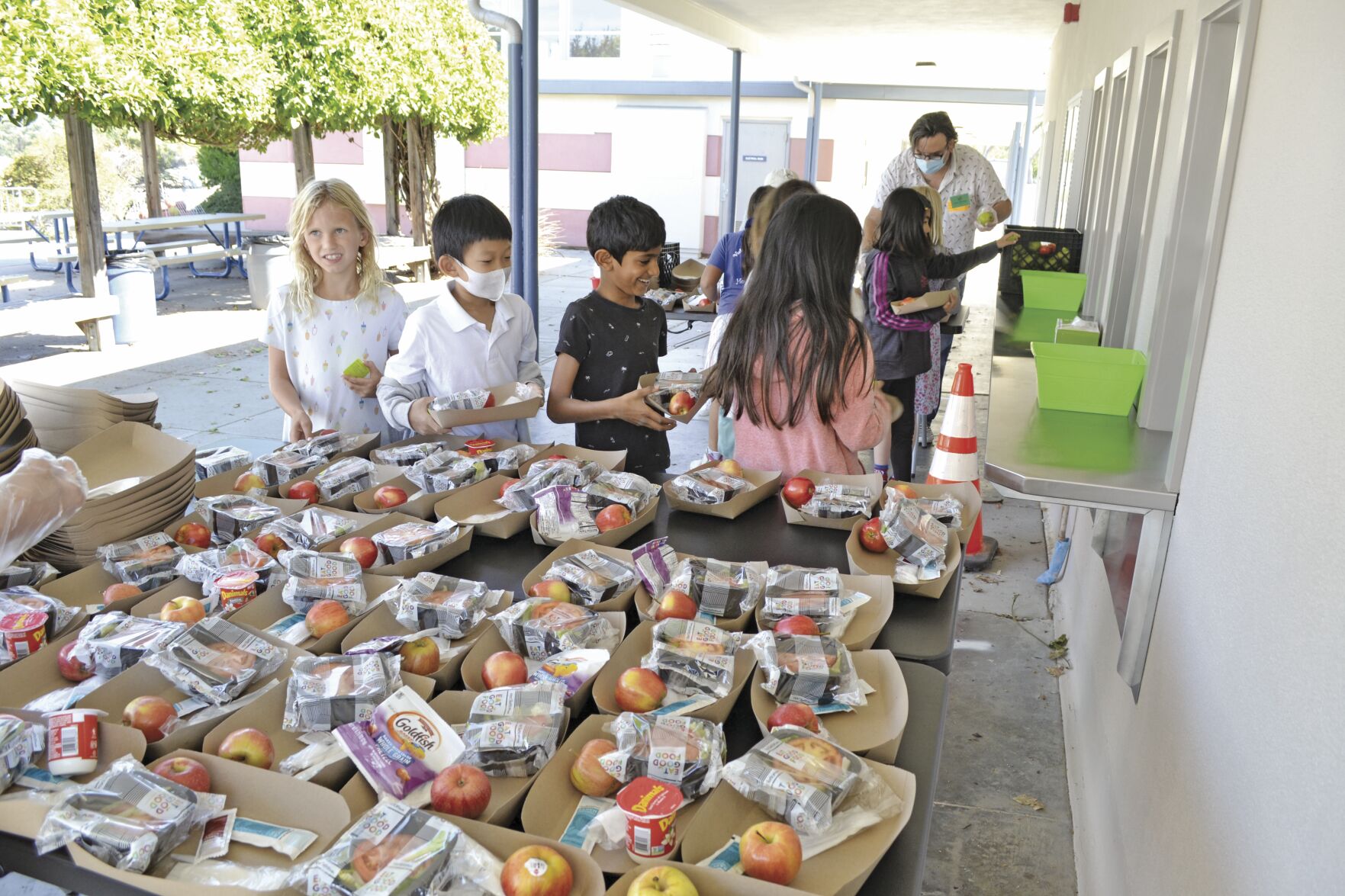
Covington, which serves the most meals in the district on average, has managed to get its lunch service routine down to under 10 minutes on average. All grade levels are released from their classrooms at noon and line up in one of two lines, depending on which meal option they choose: vegetarian or nonvegetarian. Menus are displayed on a white board each day and are also posted in advance online alongside meal nutritional information. Spenader directs the lines each day and often sticks around the lunch tables to get a sense of how kids are liking the food.
After two months, Spenader said they have overcome the learning curve of serving up to 300 lunches daily, despite some chaos early in the school year. Twin staff members Carly and Carrie Gomez play a major role in maintaining the efficiency of the hot-meal serving window, with parent volunteers providing additional support distributing the side dishes.
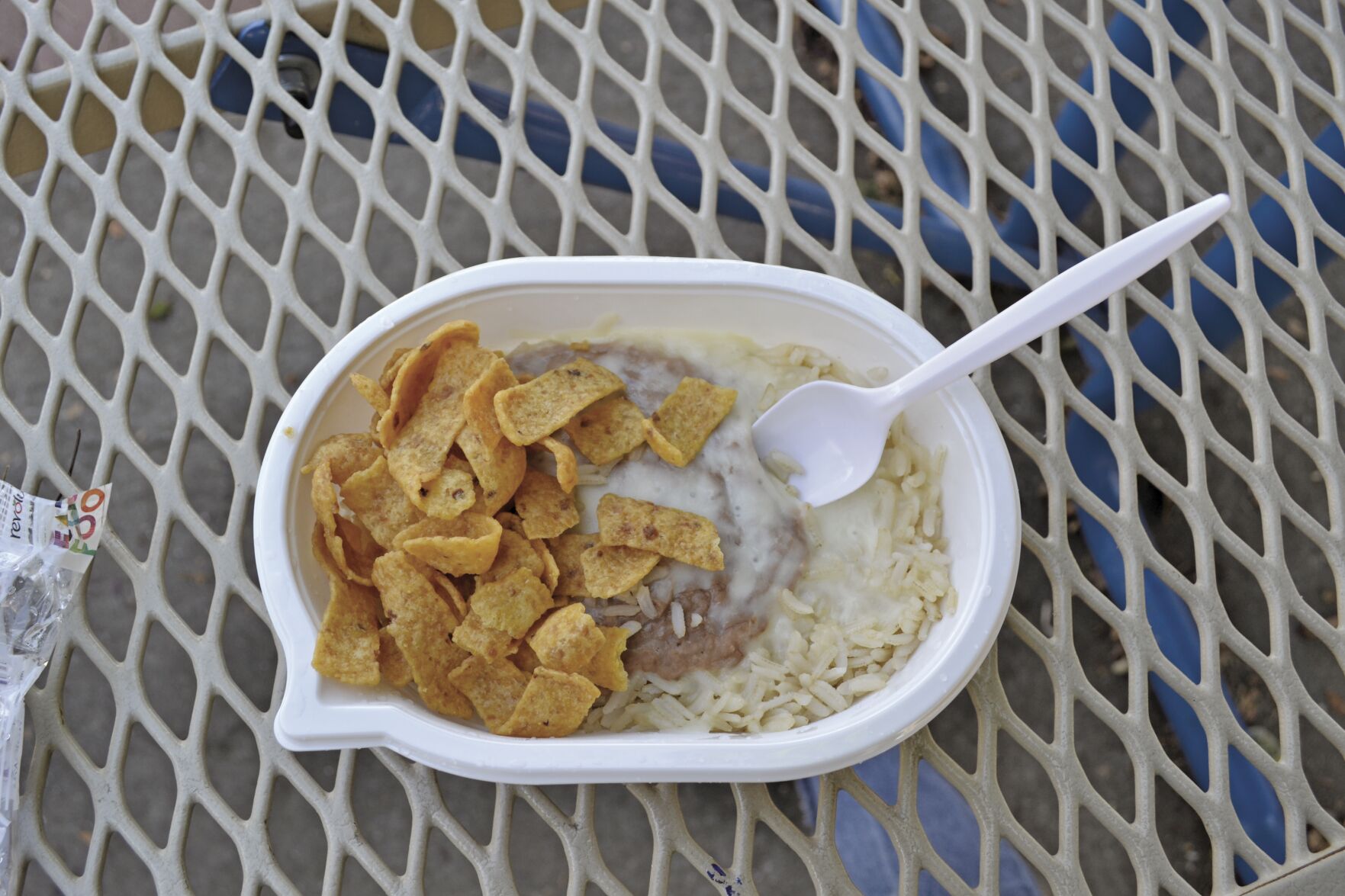
By 12:10 p.m., nearly every student has been served, though on a recent day, the school ran out of the rice and chicken teriyaki bowls, so remaining students and staff seeking food were given the vegetarian option – a ranchero bean and cheese dip served with rice and a snack bag of Fritos. Kids also had the option of choosing a breakfast food.
“It’s important that any child that wants food gets fed,” Spenader said.
Student feedback
By many metrics, the Universal Meals Program can be deemed a success, even after just a couple of months of implementation. Student participation is higher than projected, meal-serving processes are timely at each school site and the program has stayed within budget.
However, some students say there is room for improvement.
A group of sixth-graders at Covington noted some of their disappointments with this year’s lunch program when compared to previous years. Common complaints included lack of flavor in the food, inadequate portion size, less-than-fresh ingredients and an increased amount of waste.
Emily Hejret, a sixth-grader, has opted to eat the free lunch most days, but she emphasized that some meals are much better than others.
“Today it’s good,” Emily said, holding up the pear she received. “But usually the fruit is brown or not ripe.”
Students also complained that their meals lacked flavor due to a lack of salt and seasoning. They shouted out some meals as good, including the crispy chicken sandwich and many of the breakfast options, but added that others were bad enough that they decided to wait until they got home to eat.
“It’s hard to know if I should get it today or if I should pack a lunch,” sixth-grader Kedron Morgenstern said.
Despite some concerns, the students tended to rate the program positively and have hopes their feedback will be heard and improvements will be made. Students interviewed rated the new program between a 5 and 7 out of 10, saying that it’s nice to be guaranteed food while at school, especially because it makes life easier for them and their families.