From reading a story in a teacher’s lap to playing in the sandbox with friends, much of preschool is hands-on. Social-distancing requirements have made that kind of tactile learning impossible.
Locally, preschools adapted to the new reality in a variety of ways. Some rolled out full-day online instruction, others opted to offer lessons throughout the day, and still others decided not to make the switch to remote learning.
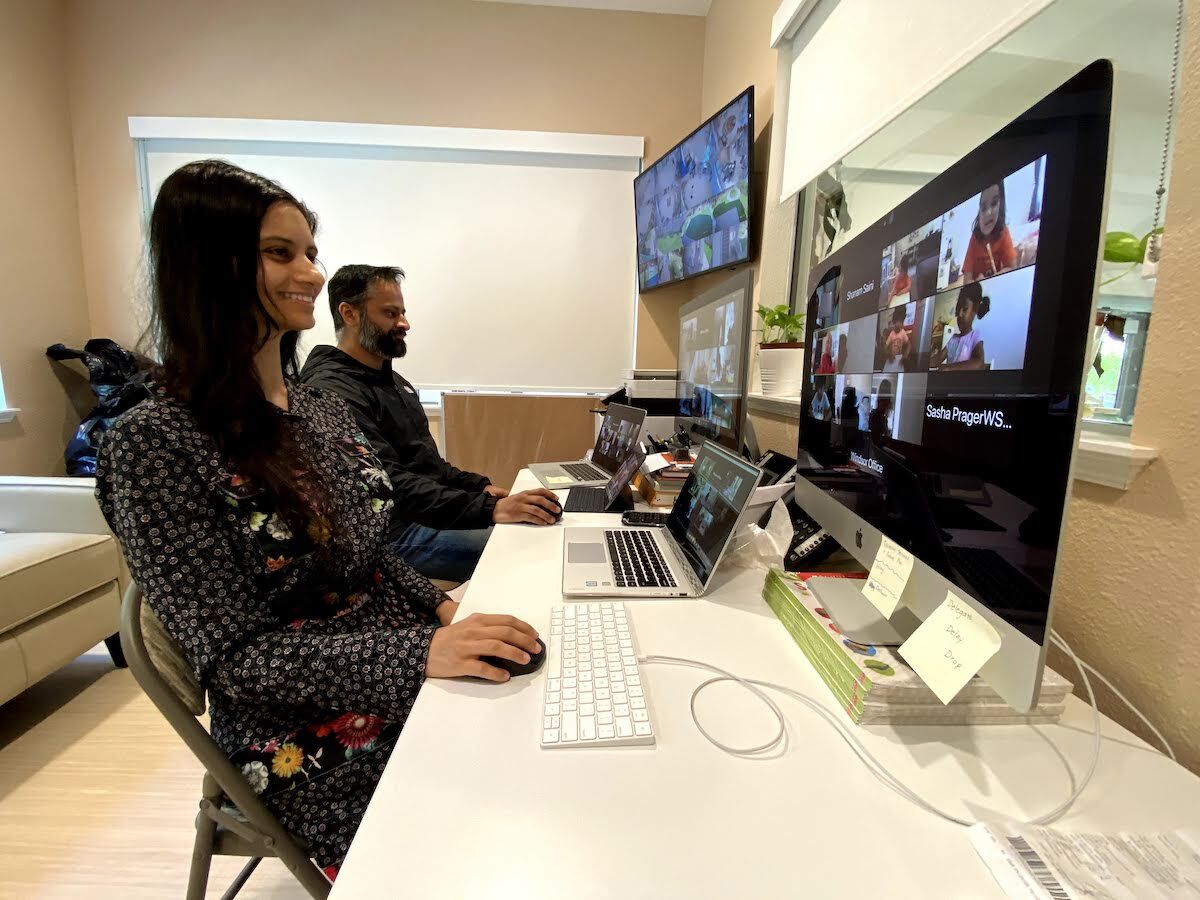
Windsor Preschool, with locations in Mountain View and Sunnyvale, chose to offer a full-day of distance learning, with activities from 9 a.m. to 5:10 p.m., save for a few breaks throughout the day. Each class has its own schedule, but most aim to follow the basic structure of a typical day when school is in session.
“We’re trying to give them as much consistency and stability as we can,” said director Shanam Saini.
Other schools have introduced lessons scheduled throughout the day. Children’s Corner, a nonprofit preschool in Los Altos, is offering four to five 20- to 40-minute online sessions per day for each class and sending out an optional daily schedule of offline and online activities.
“We’re finding that the children are really getting a lot out of it,” executive director Janette Korpontinos said. “They’re able to see each other and stay connected to their teacher.”
Children’s Corner is also offering some online sessions for free to any family in the community, regardless of whether they are enrolled in the school.
Some preschools decided against taking the plunge into online learning. Stepping Stones Preschool in Los Altos opted not to move online, with Kelly Linder, one of the school’s owners, saying she doesn’t believe it’s age-appropriate to have young children spend that much time on the computer.
“As an educator, to try to get a 2-year-old to try to sit in front of a screen, I don’t think is appropriate,” Linder said.
Instead, the school is sending out suggested activities and resources that parents can do at home with their children.
Making the switch
For those institutions that did transfer over to virtual instruction, it’s been a constant learning process. Although students were shy at first, over time they have become more comfortable participating, Children’s Corner teacher Joyce Rimbach said.
“It’s putting everybody in a nice routine, and it’s just a good way for the kids to come together,” she said.
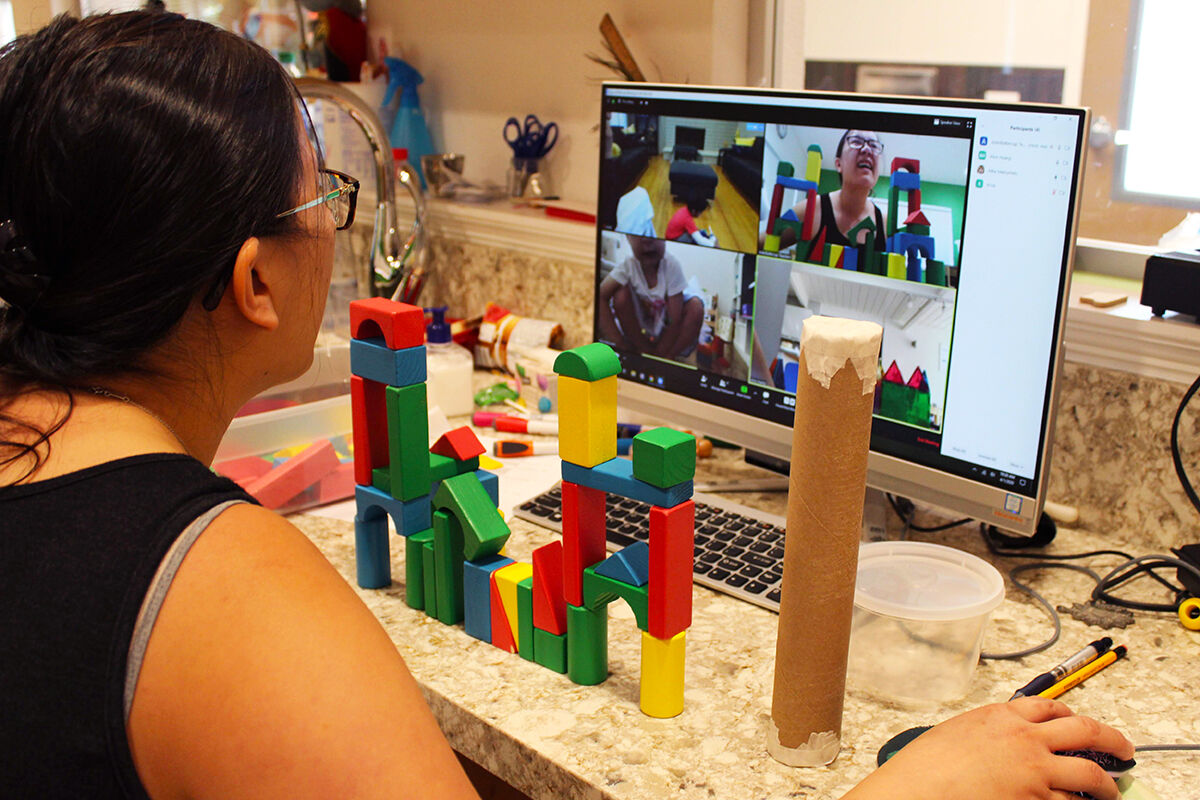
Rimbach has combined both old and new – reading stories the class has heard before, while also exploring new topics – in an effort to keep students engaged. She eats lunch with the children over video chat, giving them a casual opportunity to interact with one another.
Just as the young children have had to adjust to interacting online, teachers too have had to learn new ways of connecting with kids. There has been a “steep learning curve” for teachers, said teacher Simanti Pal at Windsor, especially because so much early learning relies on body language and physical connection.
“These things are entirely missing in this new format of learning, so we had to adapt really quickly to using just our facial expression and our voices,” Pal said.
For Saini, a top priority has been continuing to pay her teachers. As a small, family-owned business without the more substantial reserves of large chains, being unable to run a physical school has presented financial challenges. Some parents have withdrawn from the preschool. However, many families have stayed enrolled, continuing to pay tuition, and thus far the school hasn’t laid off any staff.
“What’s most important for me right now – I will not lay off my staff,” she said.
Finding balance
Focusing on a screen can prove difficult, especially for the youngest children, Saini said. However, some of the older ones have proved quite independent, learning to log in and mute themselves.
“Of course, we acknowledge the limitations, too,” she said. “It’s not the same as being able to drop off your child and not have to worry afterwards.”
Some families, especially those where both parents work, may have a difficult time juggling both working from home and supervising their children during preschool classes.
“It’s a tough balance for the families, and I understand,” Rimbach said. “If someone pops in one day and they aren’t here another day, that’s fine.”
It’s helpful if a parent is around to help younger students connect, but Korpontinos said that if not, teachers don’t push kids to focus, but rather allow them to go at their own pace. Children’s Corner is also allowing students to join sessions with various teachers, rather than only being able to attend their assigned class.
As a play-based preschool, Children’s Corner doesn’t typically encourage lots of screen time, Korpontinos said, making the switch online run somewhat counter to the normal philosophy.
“We felt like it was the time to break that rule and try to help parents, but also keep the kids and the teachers (connected),” she said.
For some preschools, though, switching online didn’t seem right. Over at Stepping Stones, Linder said it just didn’t make sense for her to teach remotely.
“It’s just not age-appropriate – children need that one-on-one contact,” she said. “They can’t sit long enough to do a video chat.”
Staff at Stepping Stones continued receiving paychecks for a couple of weeks, but were ultimately furloughed. However, some parents continue to pay a reduced tuition rate, which is allowing the school to cover its staff’s medical insurance premiums. The school also has applied for a federal Paycheck Protection Program loan to start paying staff again.
Although the school is closed, Linder has been sending out games and activities that children can work on and said she misses the families immensely.