If you don’t pay any attention to the automotive sales charts (and why would you?), you might think that Toyota and Subaru are similar companies – two makers of automobiles headquartered in Japan.
But a look at the sales charts shows the major difference: Toyota sells about 2.3 million cars, trucks and SUVs in the United States every year. Subaru sells a shade under 700,000.
It’s David vs. Goliath, and you might wonder what David would have that Goliath would want. The answer is fierce brand loyalty in a growing segment: Small, off-roadable SUVs.
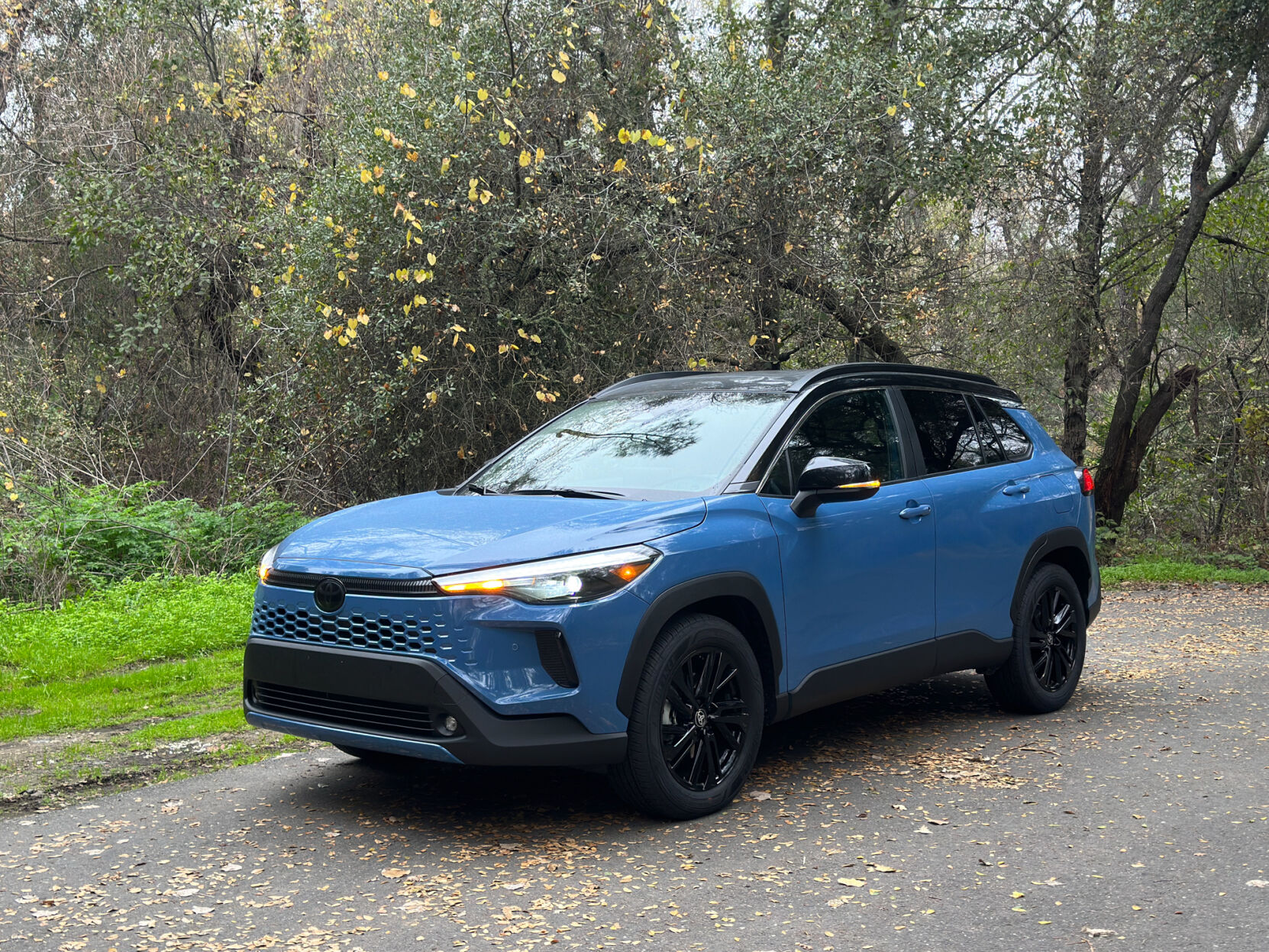
The Corolla Cross is Toyota’s answer to the Subaru Crosstrek (“On the Move,” January 2018). It’s a way for Toyota to participate in a segment Subaru has pretty well dominated the last 20 years, and, if they’re lucky, to peel off some of Subaru’s customers.
While the Corolla Cross’ all-wheel-drive system isn’t as capable as Subaru’s symmetrical AWD, it doesn’t have as much ground clearance as the Subaru, and it can’t quite match the Crosstrek’s rear seat comfort or cargo space, the Corolla Cross can top it in one key area.
Both the Crosstrek and Corolla Cross have hybrid models, and while the Crosstrek Hybrid has an EPA estimate of 36 mpg city/36 highway, the Corolla Cross Hybrid scores 46 mpg city and 39 mpg highway in the EPA test. That’s a huge difference. One that, for the vast majority of buyers who never leave the pavement, might tip the scales toward Toyota.
The hybrid system pairs an electric engine to a 2.0-liter four-cylinder engine, making 196 horsepower. Zero to 60 takes eight seconds, essentially a tie with the Crosstrek Hybrid.
I drove the top-of-the-line Corolla Cross Hybrid XSE, base price $33,030 ($34,480 including destination). In addition to what I’ve mentioned above, standard equipment at that price includes selectable drive modes, a sport-tuned suspension, 18-inch alloy wheels, heated power outside mirrors, LED headlights, fog lamps and taillights, a rear windshield wiper, a 12.3-inch digital gauge cluster, a 10.5-inch center touchscreen with a six-speaker audio system, wireless Apple CarPlay and Android Auto, a three-month trial of SiriusXM satellite radio, wireless phone charging, four USB ports, ambient lighting, dual-zone climate control, heated front seats, synthetic leather upholstery and a comprehensive suite of active safety features.
Our test vehicle also had some extra cost options – $1,250 for the Convenience Package (a tilt and slide moonroof and power liftgate), $800 for a 9-speaker JBL premium audio system with subwoofer and amplifier, $500 for a Cavalry Blue/Jet Black two-tone paint job, and $309 for carpeted floor mats and a cargo mat.
The final as-tested price: $37,339.
Having driven the Crosstrek Hybrid only a month earlier, I can say that these are two very different vehicles, despite their similarities. The Corolla Cross Hybrid costs $900 more at the base price level, but ended up being nearly $2,000 more expensive because the Subaru made all the things that were optional on the Toyota standard.
Beyond that, if you do like to go off-pavement, the Subaru just feels like the more serious, more capable vehicle. If you don’t, then the Toyota has a lot to offer – and the fuel savings will make up for the additional dollars spent.