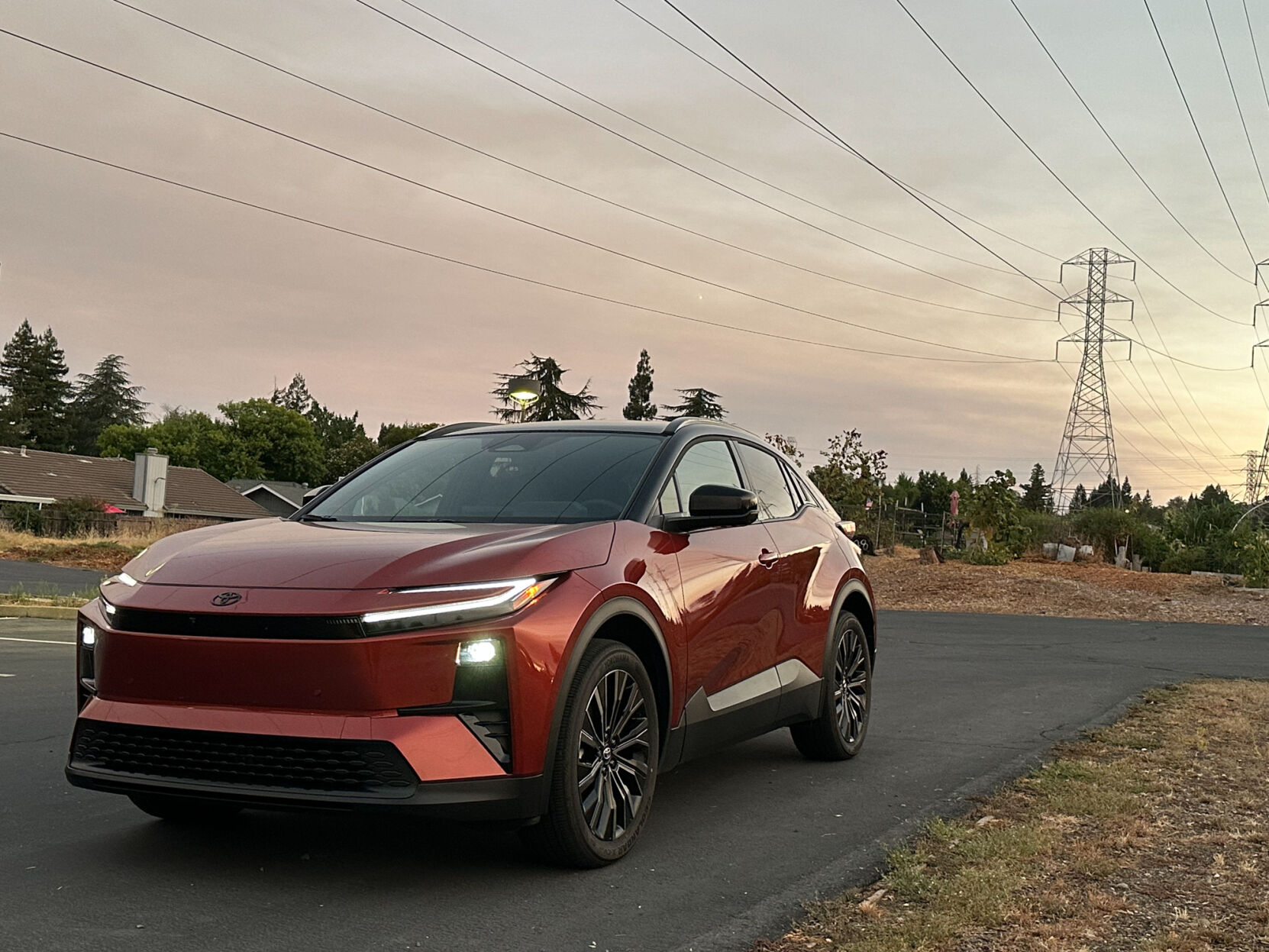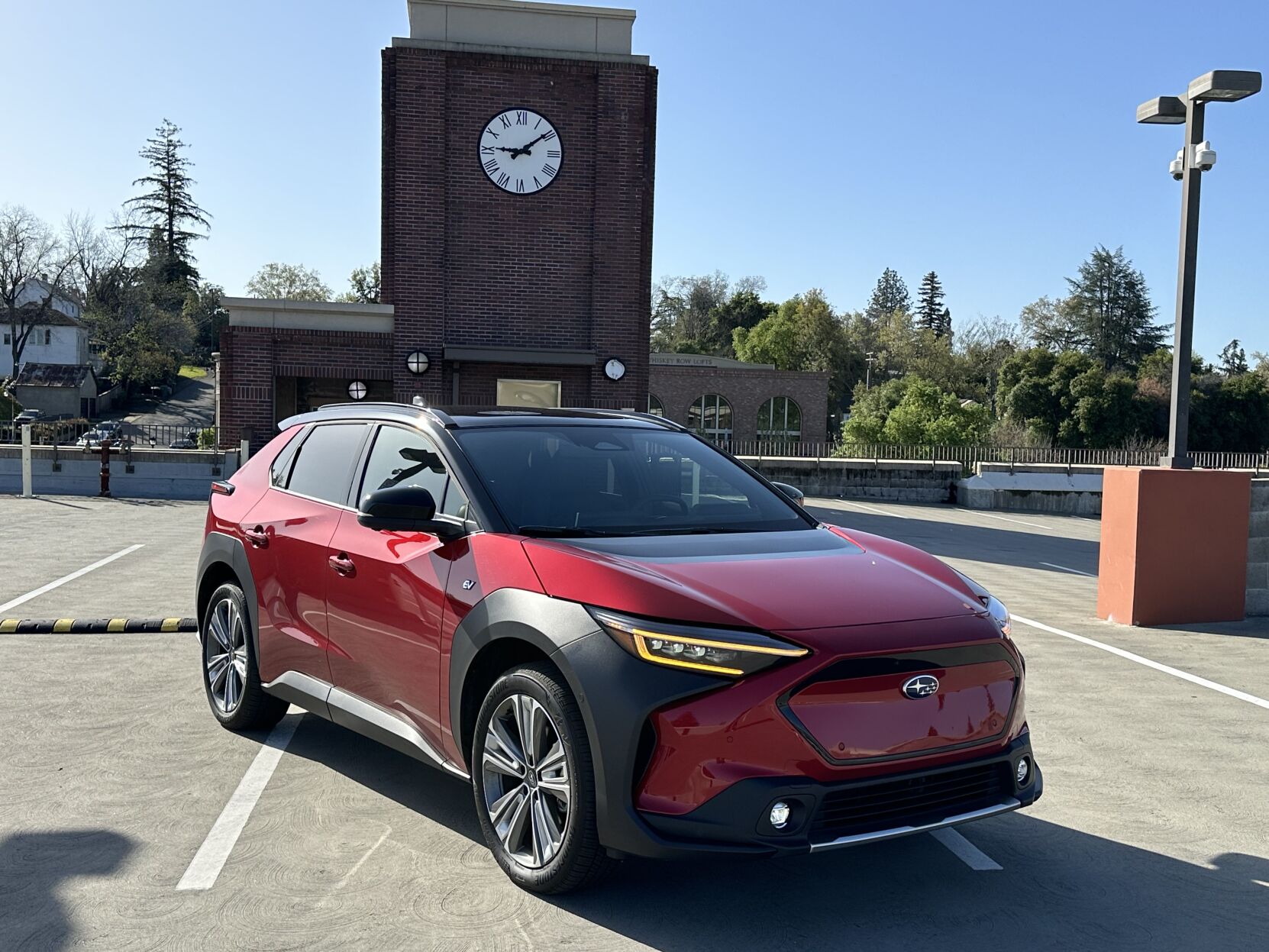
Automotive journalists, myself included, have been pretty tough on the Subaru Solterra and its near-twin, the Toyota bZ4X.
In our defense, I’ll say we come by it honestly. We drive nearly everything, usually for a week at a time, which gives us a basis for comparison that the casual shopper, limited by 10-minute test drives at the dealership, doesn’t have.
The Solterra and bZ4X had to follow the toughest acts imaginable – the Hyundai IONIQ 5 (On The Road, May 2022) and the Kia EV6 (On The Road, August 2022). And, they didn’t measure up in metrics like interior quality, power, range and charging times.
In my review of the bZ4X (On The Road, June 2023), I speculated that Toyota, which did most of the work here, perhaps didn’t want to do any better than this, a theory supported by then-CEO Akio Toyoda’s public skepticism of EVs and his company’s deep investment in hybrids and hydrogen. If it failed, it failed. And maybe it wouldn’t – both Toyota and Subaru have die-hard loyalists. The bZ4X and Solterra might be the only EVs those folks would consider, so comparisons would be irrelevant.
The good news is improvements are being made. This Solterra seemed much more solid and quiet than the bZ4X. It’s very pleasant to drive.
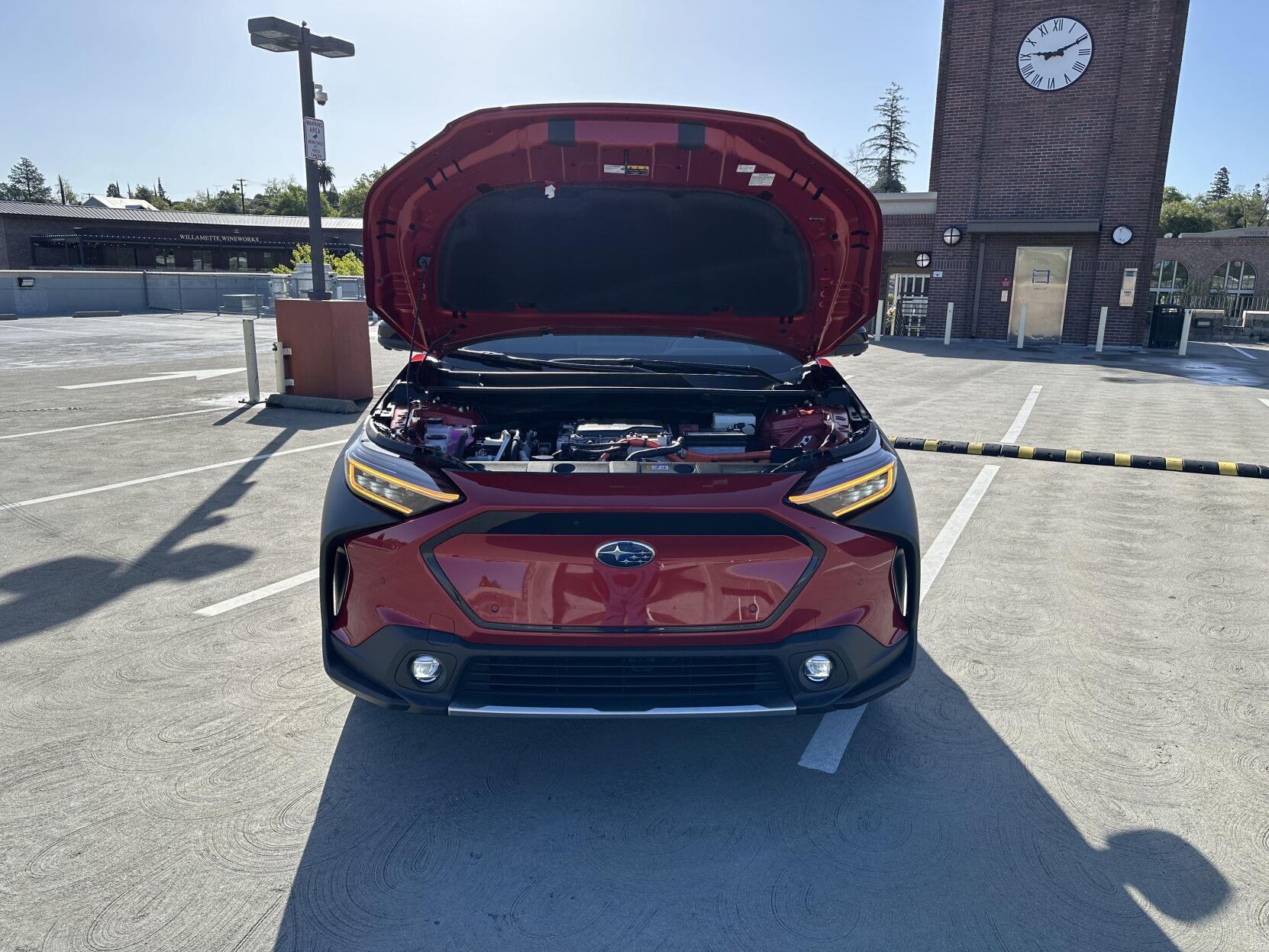
For 2024, the Subaru Solterra’s DC fast-charging rate has been improved. Going from 10% to 80% used to take an hour; that’s down to 35 minutes now, thanks to improved battery management software and the addition of a more powerful battery heater. Cold-weather charging, as far down as -22 F, is now quicker. Of course, all that assumes that DC fast chargers are properly working and delivering near their promised peak. As regular readers know, that is becoming increasingly rare.
I tried Electrify America’s new indoor charging station on Howard Street, south of Market in San Francisco, which opened in February. EA took an old automotive garage, spiffed it up, installed twenty 350kW DC fast chargers and built bathrooms, drinking fountains, lounges with vending machines and a private conference room so you can have a Zoom meeting while waiting for your car to charge. But even in this “flagship” (EA’s term) facility, which is staffed 24-7, the chargers under delivered. The peak I observed on these 350kW chargers was a Rivian that peaked at 111kW. A VW ID.4 was second at 48. The rest of us were at 40 or below, some as low as 27. My final result – charging from 50% to 83%, max charging speed 40kW, on a charger capable of 350. Total charging time 38 minutes. It’s not the car’s fault, but it is likely to irritate anyone who thinks that if 10% to 80% is 35 minutes, 50% to 80% should be half that, not three minutes longer. We are being let down by underperforming charging infrastructure.
There are three trim levels of Solterra – Premium, Limited and Touring. Subaru has made EyeSight active safety features standard on all trim levels, giving all Solterras in active cruise control the ability to have hands-free driving up to 25 mph, to resume driving when the vehicle in front accelerates from a stop, and assist lane changes when the turn signal is activated and the intended lane is clear. There’s also Front Cross Traffic Alert, making it easier and safer to enter busy intersections. DriverFocus distraction mitigation is standard on all trim levels – sensing when a driver’s eyes are off the road.
The instrument pod is still a bizarre design, but Subaru switched the steering wheels. They call it “squircular.” The flatter top actually makes the pod readable. With a round steering wheel, which the Toyota bZ4X still uses, some parts are usually blocked. Subaru and Toyota fixed a glaring error this year – the instrument pod now displays the car’s state of charge in percent. In 2023, you needed a phone app. The pod only showed a fuel-tank style gauge and estimated range remaining.
Our test vehicle was the Touring. The base price is $53,340. It’s all-wheel drive and range is EPA-estimated at 222 miles. At that price, there’s a lengthy list of standard equipment, leaving only premium paint as an extra-cost option. Ours was Elemental Red Pearl ($890), so the bottom line of the window sticker reads $54,230.
These days, the price is in the ballpark for loaded electric SUVs. I’d argue the Solterra still isn’t entirely competitive with what Hyundai and Kia are doing. But it’s encouraging to see useful, relevant second-year improvements in the Solterra. Those buyers who wouldn’t consider another brand will see benefits from that.