One of the blessings that’s also a curse about reviewing new cars is that most often, the manufacturers will send fully loaded, top-of-the-line examples for review.
That’s a good thing, because it allows a writer to get a sense of what the carmaker thinks is the best it does and the way forward. But it’s a bad thing, because too much stuff often obscures the attributes of the vehicle itself.
Think of it like a hamburger – if you put a dozen condiments on it, are you really able to taste the beef?
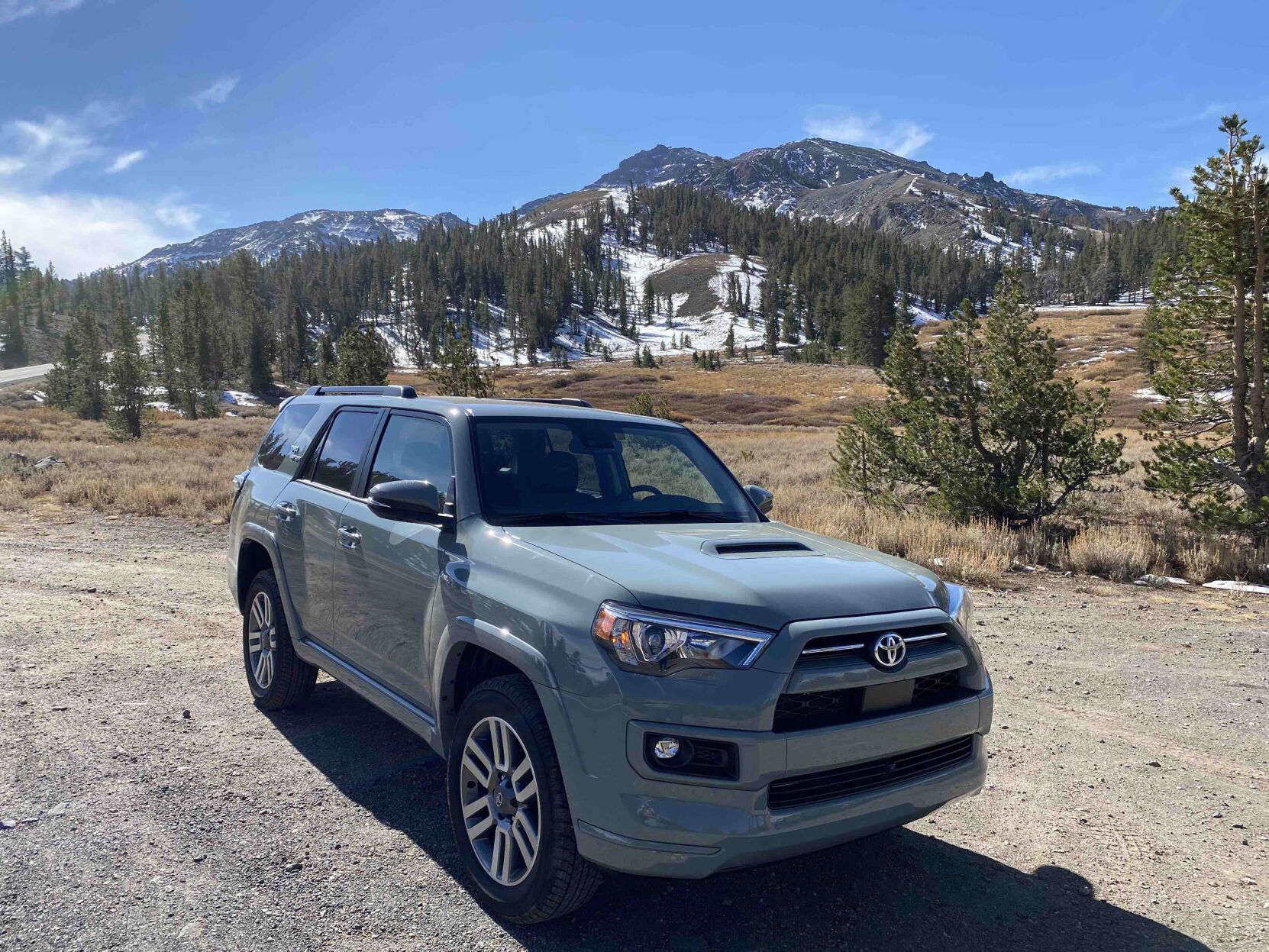
That’s why I was elated to see the 2022 Toyota 4Runner TRD Sport land in my driveway. The TRD Sport is a new trim level – just one up from the base SR5, with the main differences being a move up to 20-inch wheels, SofTex-trimmed seats and a sport-enhancement suspension.
Under the hood is the same engine that powers all Toyota 4Runners: a 4.0-liter, 276-horsepower V6 mated to a five-speed (yes, five) automatic transmission. Zero to 60 mph from a standing start takes approximately 7.5 seconds.
We drove over a couple of High Sierra mountain passes, the tallest being Sonora Pass (elevation at the summit is 9,623 feet), and there was nothing the 4Runner couldn’t handle, though 75 additional horsepower and five more gears would have helped. A modern turbocharged engine with a 10-speed automatic would also help the gas mileage, which at 16 mpg city/19 mpg highway, is no great shakes. After 600 or so miles of some widely varying terrain, I wound up with an average of 22 mpg, so your mileage may vary. Mine did.
Basic is better
The 4Runner comes in eight trim levels, with the top-tier TRD Pro having a base price of $52,120. The TRD Sport 4X4, on the other hand, starts at $42,025 – more than 10 grand below the Pro. Yes, the Pro is the ultimate off-road 4Runner, but the Sport has more than a bit of mountain goat in it as well.
Standard equipment highlights on the Pro include Toyota’s complete Safety Sense suite of active safety features, along with a tow hitch, a power-sliding rear window and an 8-inch touchscreen audio system.
Our tester went light on the extra-cost options; it came with an upgraded eight-speaker premium audio system with navigation ($1,585), a technology package including blind-spot monitor and rear cross-traffic alert ($1,310) and all-weather floor liners and cargo tray ($269).
With Toyota’s “Keep It Wild Savings” of $500 deducted and $1,215 delivery processing and handling fee added, the as-tested price of the Sport is $45,904.
But here’s the thing: In a fairly basic model like the Sport, the overall goodness of the 4Runner comes through more strongly than in a loaded model with a sticker price more than $10,000 higher. The 4Runner is now in its 12th model year, essentially unchanged, and getting one closer to the basics is a great reminder of just how solid the entire vehicle really is. Apart from more power and more gears, I never wanted anything the Sport didn’t have or couldn’t give. And driving around the High Sierra all weekend, I could easily picture myself owning this exact vehicle and being perfectly pleased with the purchase.